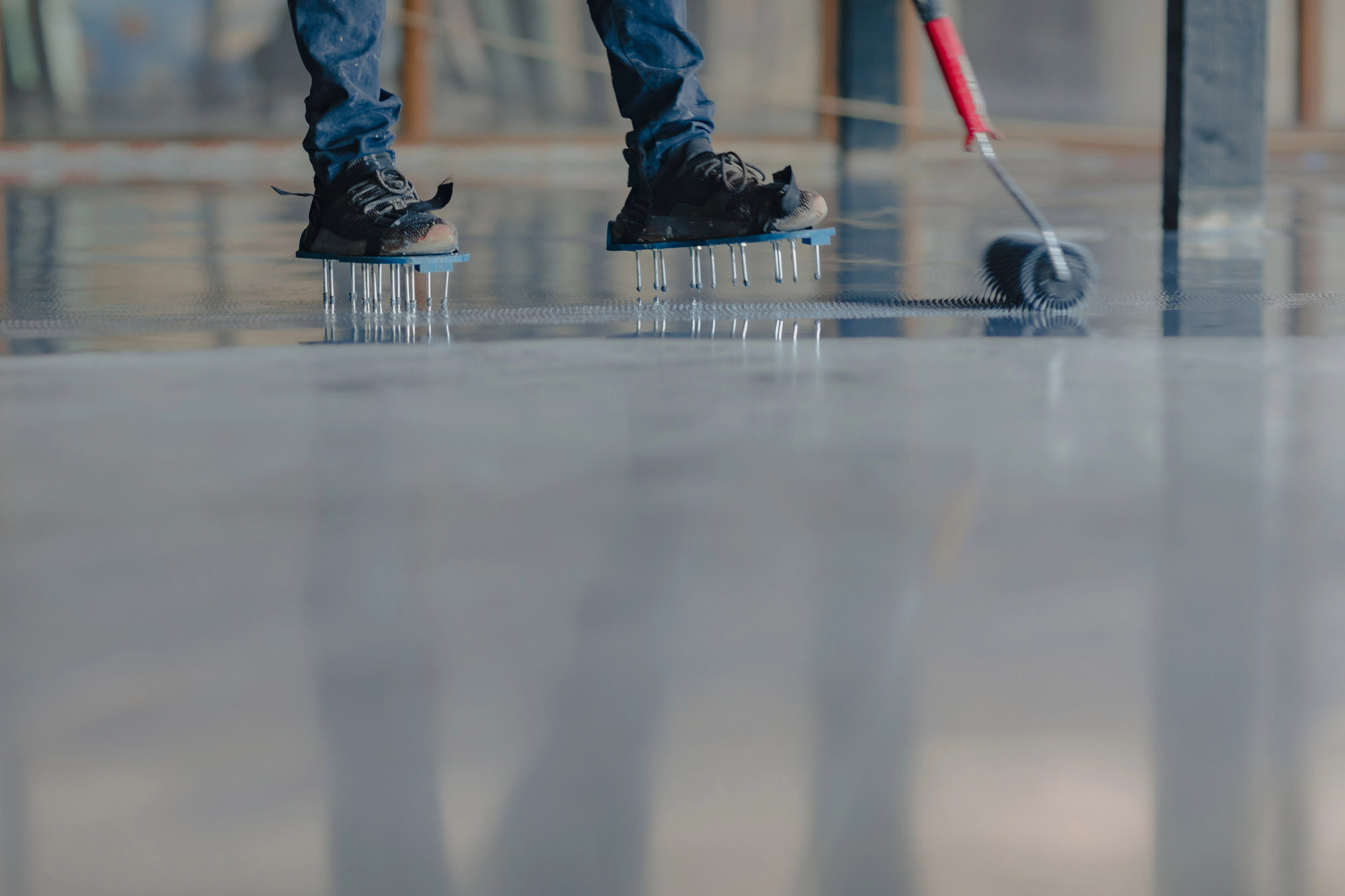
If you’ve been researching floor coatings for your garage, warehouse, utility room, or commercial space, you’ve almost certainly come across epoxy paint. It’s one of the most widely recommended options for concrete floors, and for good reason. When applied correctly to the right surface, epoxy paint delivers a level of durability, chemical resistance, and visual appeal that standard floor paints simply cannot match. But it’s not the right choice for every situation. Here’s what you need to know to decide whether epoxy paint is the right fit for your project.
What Is Epoxy Paint?
Epoxy paint is a coating system made from two separate components: a resin and a hardener. When mixed together, these two parts undergo a chemical reaction that creates a tough, cross-linked polymer film. This is fundamentally different from standard acrylic or latex floor paints, which dry through water evaporation. Because epoxy paint cures through a chemical process rather than simply drying, the resulting film is harder, denser, and far more resistant to mechanical stress, chemical exposure, and moisture.
It’s worth noting that the term “epoxy paint” is sometimes used loosely to describe both true two-part epoxy systems and single-component products that contain epoxy resin but don’t require mixing. True two-part epoxy paint is significantly more durable and is the type recommended for demanding applications like garages, workshops, and commercial floors.
Where Epoxy Paint Works Best
Epoxy paint performs at its best on dense, well-prepared concrete surfaces that are subjected to heavy use. Common applications include:
- Garage floors — handles vehicle traffic, oil and chemical spills, and hot-tire contact without peeling or staining
- Workshops and service areas — resists abrasion from foot traffic, dropped tools, and equipment movement
- Basements and utility rooms — creates a moisture-resistant barrier that prevents seepage from affecting the slab
- Commercial kitchens and food service areas — provides a seamless, easy-to-clean surface that meets hygiene standards
- Warehouses and industrial floors — withstands forklift traffic and heavy machinery loads
In the Bahamas, this paint is an excellent choice for carports, covered parking areas, and utility spaces where concrete floors are regularly exposed to rain, standing water, and high humidity. The seamless, impermeable surface it creates prevents moisture from penetrating the slab and dramatically reduces the growth of mold and mildew beneath the surface.
Epoxy Paint Options From Sherwin-Williams
Pro Industrial High-Performance Epoxy
This is one of Sherwin-Williams’ flagship epoxy paint products for demanding commercial and industrial environments. It delivers exceptional abrasion and chemical resistance, strong adhesion to properly prepared concrete, and a smooth, professional finish. It’s suitable for surfaces that see heavy foot and vehicle traffic and is a solid choice for anyone needing a high-performance floor coating in a commercial Bahamian property.
Pro Industrial Pre-Catalyzed Water-Based Epoxy
A more user-friendly option, this water-based epoxy paint offers strong durability in a formula that’s easier to apply and clean up than solvent-based alternatives. It’s a good choice for residential and light commercial applications where performance matters but the full complexity of a two-component solvent system isn’t necessary.
Water-Based Catalyzed Epoxy
For homeowners tackling a garage or utility room floor, the water-based catalyzed epoxy offers a strong balance of durability and ease of application. It bonds well to concrete, resists common household chemicals, and dries to a hard, attractive gloss finish. This category of epoxy paint bridges the gap between DIY-friendly products and professional-grade coatings.
Epoxy Paint vs. Regular Floor Paint: Key Differences
Many people wonder whether they really need epoxy paint or whether a standard floor coating will do the job. The differences come down to a few key factors:
- Hardness — epoxy paint cures to a significantly harder surface than standard floor paint, making it far more resistant to scratches, scuffs, and impact
- Chemical resistance — epoxy resists oil, gasoline, solvents, and cleaning chemicals; standard floor paints offer limited resistance
- Adhesion — when properly applied, epoxy paint bonds chemically to concrete, while standard paints form a weaker mechanical bond
- Longevity — a well-applied epoxy system can last 10 years or more with minimal maintenance; standard floor paints typically need recoating every 2 to 3 years
- Preparation requirements — epoxy paint requires thorough surface preparation, including degreasing and concrete profiling, to perform correctly
If your floor will see vehicle traffic, chemical spills, or heavy equipment use, epoxy paint is worth the additional preparation effort and upfront cost. For lighter-use spaces, a high-quality standard floor coating may be sufficient. Our post on the best paint for concrete floors and garage spaces covers the broader range of options if you’re still deciding.
Surface Preparation: The Non-Negotiable Step
No epoxy paint system will perform as intended on a poorly prepared surface. Concrete must be clean, dry, and free of oil, grease, curing compounds, and previous coatings before application. Oil contamination in particular will prevent the epoxy from bonding and cause delamination. The concrete surface also needs to be profiled, either by acid etching or mechanical grinding, to create a texture that gives the epoxy something to grip.
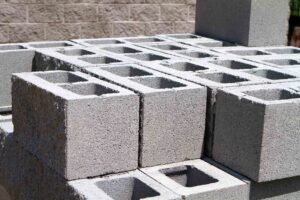
On rough or highly porous concrete, applying a block filler before your epoxy paint layer will improve surface uniformity and adhesion. Our post on block filler paint and when to use it is worth reading before you start any concrete coating project. And for general preparation guidance, see our post on how to prepare surfaces before painting.
Get Expert Advice on Epoxy Paint at Sherwin-Williams Bahamas
Choosing the right epoxy paint system for your specific floor, use case, and environment is easier when you have expert guidance. At Sherwin-Williams Bahamas, our team can help you identify the right product, walk you through the preparation process, and make sure you have all the right tools and supplies for the job.
Stop by one of our two Nassau locations or contact us to discuss your project. Browse our full interior paint and coatings selection and check out our painting supplies to get everything you need in one place.