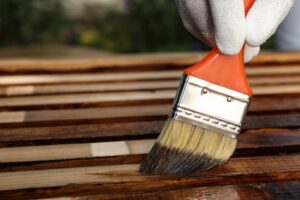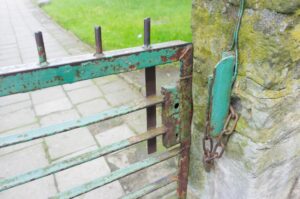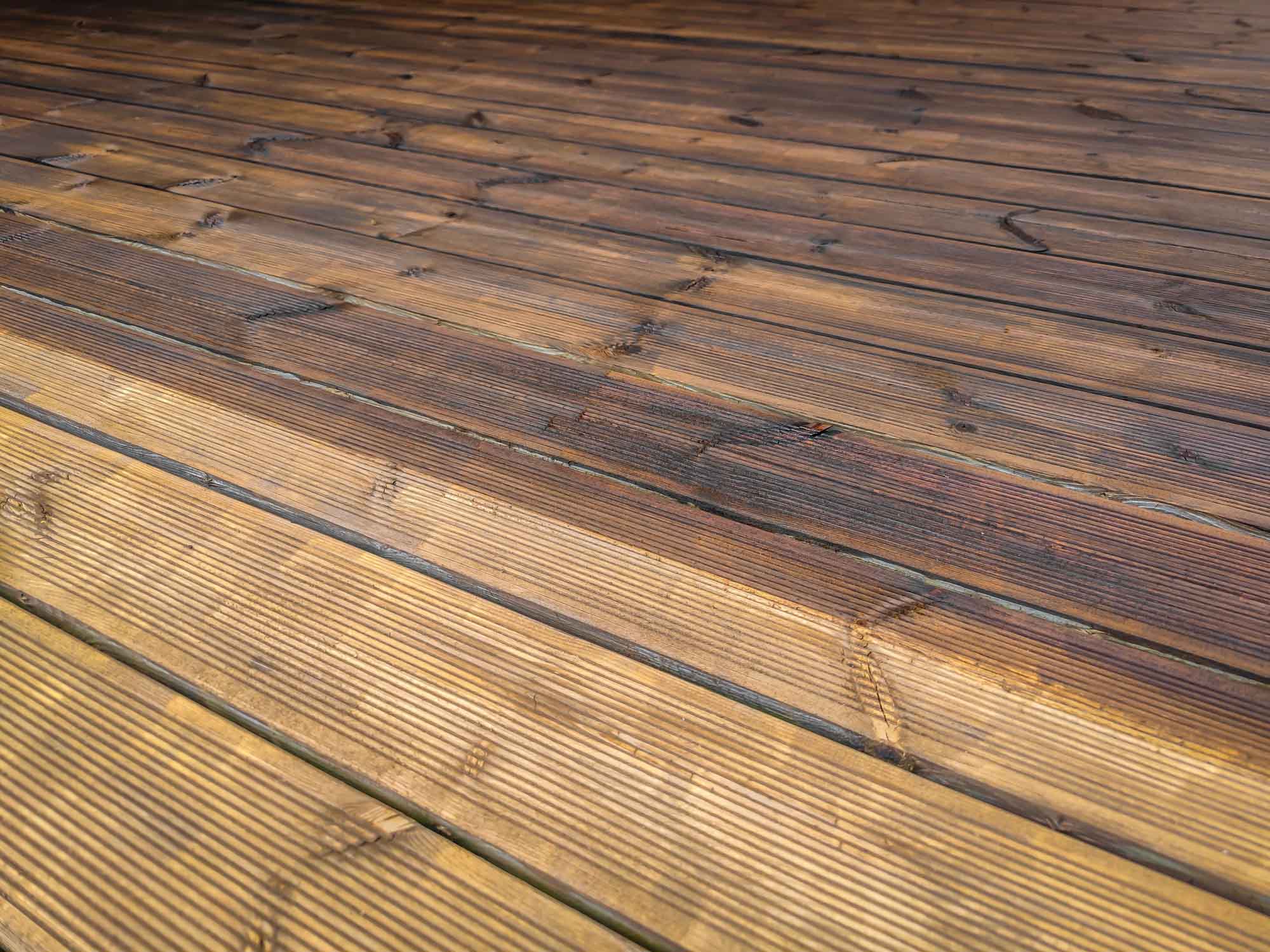
Wood is one of the most beautiful and versatile building materials available, but it’s also one of the most vulnerable to the Bahamian climate. Between the heavy tropical rains, persistent humidity, intense UV exposure, and salt air, unprotected wood can begin to crack, warp, gray out, and rot in a matter of seasons. The right waterproof paint for wood creates a durable barrier that keeps moisture out, maintains the appearance of the wood, and extends the life of decks, siding, fences, pergolas, and outdoor furniture by years.
Why Waterproof Paint for Wood Matters in the Bahamas
In a temperate climate, wood might go years without significant weather damage. In the Bahamas, the combination of tropical rain, constant humidity, and UV radiation creates an accelerated deterioration cycle. Moisture enters wood through end grain, cracks, and surface checks, causing the wood to swell. When it dries, it contracts. This repeated expansion and contraction loosens fasteners, opens joints, and eventually leads to splitting and decay.
Waterproof paint for wood works by sealing the surface against moisture penetration, slowing this cycle dramatically. Quality products also include UV inhibitors that prevent the graying and surface degradation caused by prolonged sun exposure, another major concern in the Bahamas where UV index levels are consistently high year-round.
Understanding Your Options: Sealers, Stains, and Solid Coatings
When it comes to waterproof paint for wood, there are three main product categories to understand, each offering a different level of protection and a different visual result:
Clear Sealers
Clear sealers like the Sherwin-Williams SuperDeck Exterior Waterborne Clear Sealer penetrate into the wood fibers and repel water without adding color or significantly changing the appearance of the wood. They allow the natural grain and character of the wood to show through while providing a solid first line of defense against moisture. Clear sealers are best for newer wood in good condition and typically need reapplication more frequently than stains or solid coatings, often every 1–2 years in the Bahamian climate.
Semi-Transparent Stains
Semi-transparent exterior stains offer a step up in protection over clear sealers. They penetrate the wood surface, add color while allowing the grain to show through, and contain UV blockers and water-repellent additives. A quality semi-transparent waterproof paint for wood in this category can last 2–3 years before recoating is needed, making it a good balance of performance and aesthetics for decks, siding, and fencing.
Solid Color Stains and Exterior Paints
Solid stains and exterior paints provide the highest level of moisture protection because they form a film over the wood surface rather than penetrating into it. They fully conceal the wood grain and deliver a uniform color finish. For older or more weathered wood, a solid coating is often the most practical choice because it covers surface imperfections while providing maximum waterproofing. The tradeoff is that film-forming products can peel if moisture gets trapped beneath them, which is why proper surface preparation is critical.
How to Apply Waterproof Paint for Wood Correctly
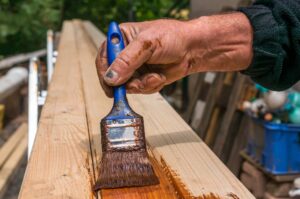
Selecting the right waterproof paint for wood is only half the equation. Proper application is just as important for long-term performance:
- Clean the surface thoroughly — remove dirt, mildew, grease, and any old peeling finish. A pressure washer is ideal for decks and horizontal surfaces.
- Allow the wood to dry completely — applying any waterproofing product to damp wood traps moisture and invites mold growth and adhesion failure. In the Bahamas, this can mean waiting 24–48 hours after rain before you begin.
- Sand lightly — this opens the wood grain and helps penetrating products absorb evenly, and gives film-forming products a better surface to bond to.
- Apply a wood conditioner on softwoods — this promotes even absorption and prevents blotchiness.
- Apply thin, even coats — don’t try to build up protection in a single heavy coat. Multiple thinner coats bond better and last longer.
For a full walkthrough on exterior wood prep and application, our post on the best wood stain for outdoor decks in the Bahamas covers the process in detail, and our guide on how to prepare surfaces before painting provides useful general prep principles.
How Often Do You Need to Reapply?
Even the best waterproof paint for wood will need periodic maintenance in the Bahamian climate. As a general rule:
- Clear sealers: every 1–2 years
- Semi-transparent stains: every 2–3 years
- Solid stains and exterior paints: every 3–5 years with proper prep
Watch for signs that it’s time to recoat: water no longer beading on the surface, color fading, surface graying, or any cracking and peeling. Addressing these early prevents more extensive wood damage and makes the recoating job easier. See our post on why paint peels and cracks,and how to fix it if you’re already dealing with coating failure on your wood surfaces.
Find the Right Waterproof Paint for Wood at Sherwin-Williams Bahamas
At Sherwin-Williams Bahamas, we carry a full range of waterproof paint for wood products. From clear sealers and semi-transparent stains to solid exterior coatings, all suited to the demands of the Bahamian climate. Our team can help you choose the right formula based on your wood type, its current condition, and the level of protection you need.
Visit one of our two Nassau store locations or contact us today to talk through your project with a specialist. Browse our exterior paints and coatings to explore what we carry.