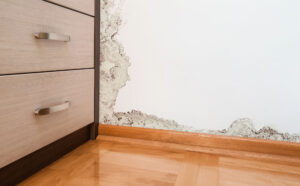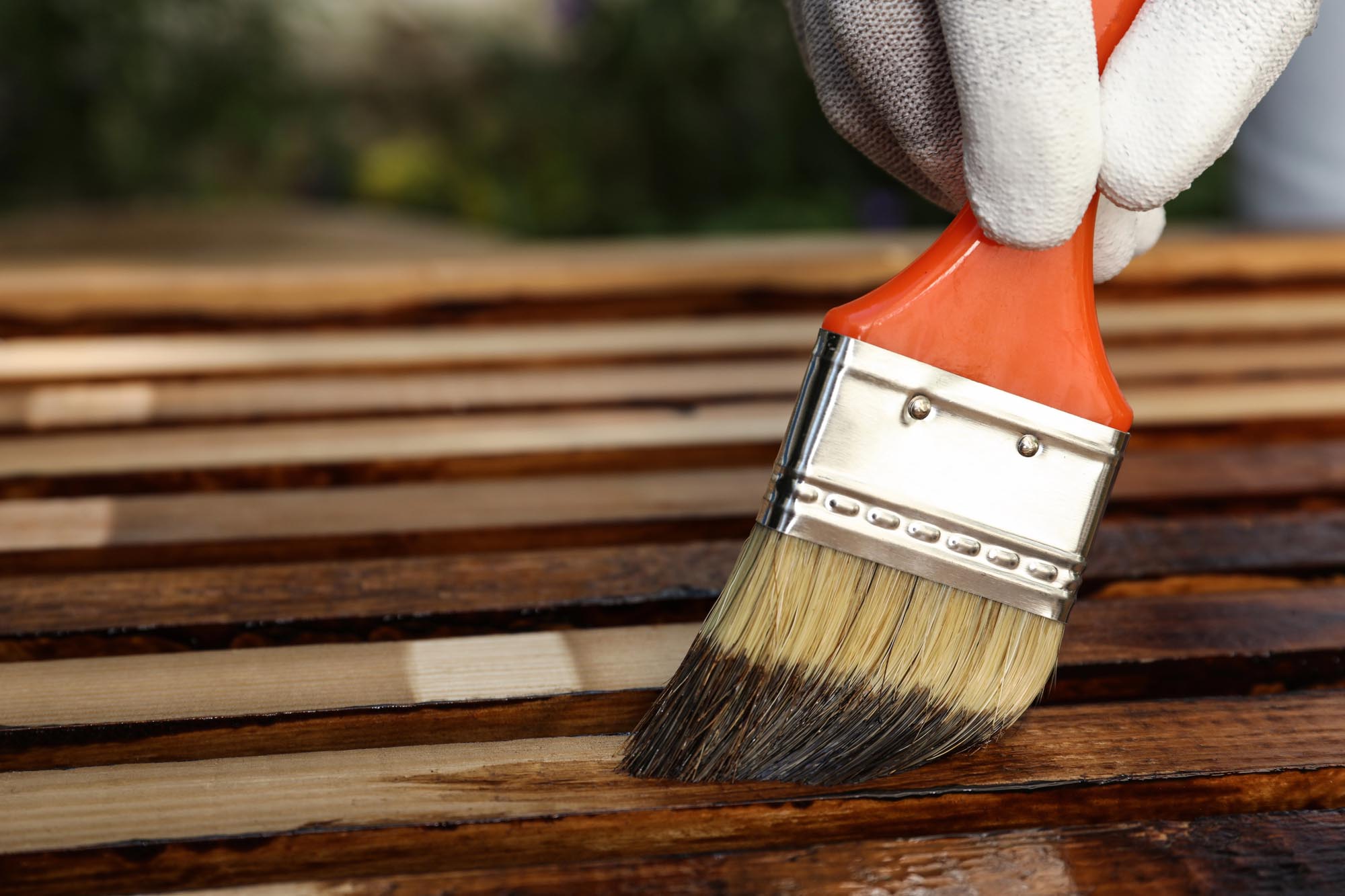
Wood is a beautiful and versatile material, but in the Bahamas it faces a relentless assault from the elements. Intense UV radiation, heavy tropical rains, persistent humidity, and salt air all work together to gray, crack, and decay unprotected wood surfaces faster than in almost any other climate. Choosing the right exterior wood stain is one of the most important decisions you can make to keep decks, fencing, siding, pergolas, and outdoor furniture looking great and lasting for years.
What Does Exterior Wood Stain Actually Do?
Unlike paint, which forms a film on top of the wood surface, exterior wood stain penetrates into the wood fibers themselves, protecting from within. This penetrating action means stain moves with the wood as it expands and contracts in the heat and humidity, making it far less prone to cracking, peeling, and blistering than paint on exterior wood surfaces.
A good exterior wood stain delivers three core forms of protection: UV resistance to prevent fading and surface graying, water repellency to keep moisture from penetrating the wood, and mildewcide additives to inhibit the mold and mildew growth that is a near-constant concern in the Bahamian climate. The best products combine all three in a single formula, so you get comprehensive protection in every coat.
Understanding Stain Transparency Levels
One of the first decisions you face when choosing an exterior wood stain is transparency. There are four main options, and each suits a different situation:
Clear or Toner Stains
These offer maximum visibility of the wood grain and natural color with minimal added pigment. They provide water repellency and some UV protection, but because they contain little pigment, they offer the least UV resistance and require the most frequent reapplication, typically every 1 to 2 years in the Bahamas.
Semi-Transparent Stains
A semi-transparent exterior wood stain allows the grain and texture of the wood to show through while adding color and significantly more UV and moisture protection than a clear product. This is one of the most popular choices for decks and fencing on wood in good condition. Sherwin-Williams WoodScapes and SuperDeck lines offer excellent semi-transparent options with strong tropical performance.
Semi-Solid Stains
Semi-solid stains show some grain but with more color coverage than semi-transparent. They are a good middle ground for wood that has some surface weathering or minor imperfections but is still structurally sound.
Solid Color Stains
A solid exterior wood stain fully conceals the wood grain and delivers paint-like color coverage. The Sherwin-Williams WoodScapes Exterior Acrylic Solid Color House Stain is a premium example, offering maximum protection, broad color selection, and excellent adhesion. Solid stains are the best choice for heavily weathered wood or siding where consistent color and maximum protection matter more than showing the grain. Unlike paint, solid stains still penetrate the wood rather than forming a surface film, so they maintain better flexibility and are easier to recoat when the time comes.
Key Features to Look for in an Exterior Wood Stain
When evaluating any exterior wood stain for use in the Bahamas, look for these qualities:
- UV blockers — essential for preventing the rapid fading and surface graying caused by intense tropical sun
- Mildewcide additives — built-in mold and mildew resistance is a must in high-humidity environments
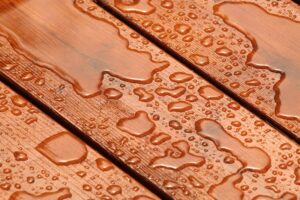
- Water repellency — the stain should cause water to bead up on the surface rather than soak in
- Flexibility — the formula should accommodate the natural expansion and contraction of wood in changing temperatures and humidity
- Penetrating formula — products that penetrate rather than form a surface film last longer on exterior wood
How to Apply Exterior Wood Stain Correctly
Even the best exterior wood stain won’t perform as intended without proper surface preparation and application. Follow these key steps:
- Clean the surface thoroughly — remove dirt, mildew, grease, and any old peeling finish before staining
- Allow the wood to dry completely — in the Bahamas, wait at least 2 to 3 days after rain before applying stain, as moisture in the wood prevents proper penetration
- Test the color first — apply stain to a small, discreet area before committing to the full surface to confirm the color is what you expect
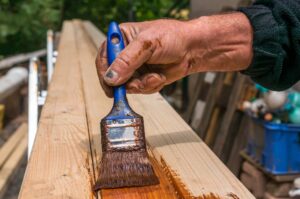
- Apply in the direction of the grain — use smooth, even strokes and wipe off any excess to avoid lap marks
- Avoid staining in direct sunlight — stain applied to a hot surface in direct sun dries too fast and can leave uneven lap marks
- Apply a second coat for darker color or extra protection — particularly on badly weathered or unfinished wood
For our full companion guide on protecting wood against moisture, read our post on waterproof paint for wood and how to protect your home from rain. And for decks specifically, our post on the best wood stain for outdoor decks in the Bahamas goes into additional detail on product selection and reapplication timelines.
How Often Should You Reapply Exterior Wood Stain?
In the Bahamian climate, expect to reapply exterior wood stain more frequently than you would in a milder environment. As a general guide: clear stains every 1 to 2 years, semi-transparent stains every 2 to 3 years, and solid stains every 3 to 5 years with proper prep. Watch for signs of fading, water no longer beading on the surface, or graying of the wood as indicators that it’s time to recoat.
If you are also considering staining a fence, our dedicated post on fence stain vs. fence paint covers which option works better for different fencing situations.
Find the Right Exterior Wood Stain at Sherwin-Williams Bahamas
At Sherwin-Williams Bahamas, we carry a full range of exterior wood stain products including the WoodScapes and SuperDeck lines, with options covering every transparency level and application type. Our team can help you choose the right formula based on your wood type, its current condition, and the look you want to achieve.
Visit one of our Nassau locations or contact us to speak with a specialist. Browse our full exterior paints and coatings selection and pick up the right brushes and supplies to get the job done right.