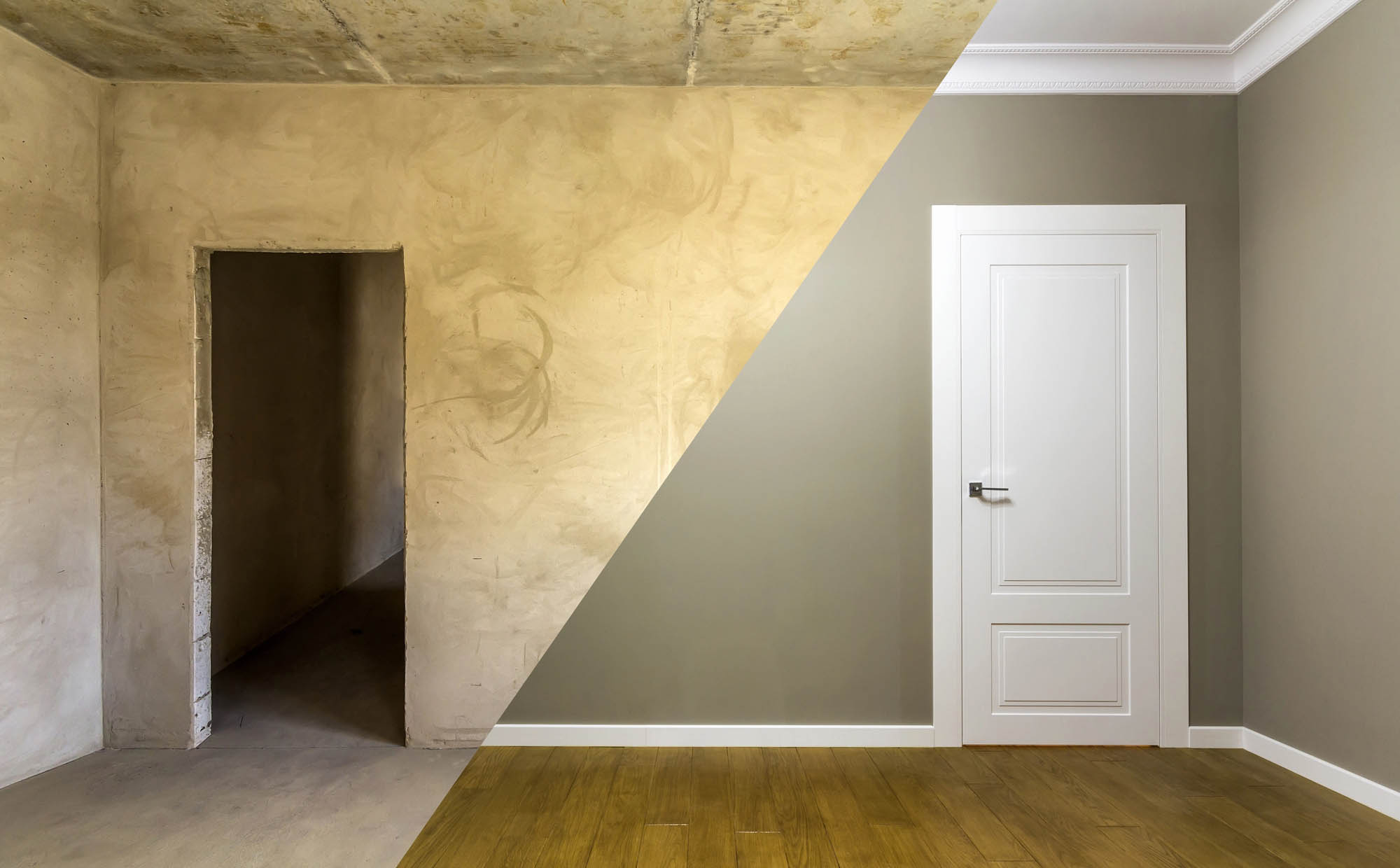
So your Gen Z tenant painted the walls charcoal. Or you had a dramatic midnight blue accent wall phase that you’ve since outgrown. Whatever the reason, figuring out how to successfully paint over dark wall colors is one of the most common challenges homeowners face, and one of the most frustrating when done wrong. Without the right approach, you can end up applying coat after coat and still see that dark color bleeding through.
The good news? With the right primer and technique, you can paint over dark wall colors efficiently and get a clean, bright finish, often in just two coats.
Why It’s Hard to Paint Over Dark Wall Colors
Dark pigments are dense and powerful. When you try to paint over dark wall surfaces with a lighter color directly, the dark pigments underneath show through the new paint film, creating a muddy, uneven result. This is especially true with deep colors like navy blue, forest green, dark gray, burgundy, and black. The thinner your topcoat, the more bleed-through you’ll see.
The solution isn’t just applying more coats of your new color, it’s changing your approach from the very beginning.
Step 1: Start With the Right Primer
This is the single most important step when you need to paint over dark wall colors. A high-quality primer specifically designed for color blocking will dramatically reduce the number of topcoats you need. Here’s what to look for:
- Tinted primer — ask your Sherwin-Williams Bahamas specialist to tint your primer close to your new topcoat color. This closes the gap between the dark base and your new lighter shade.
- High-hide primer — formulated with more pigment and opacity than standard primers, designed specifically for covering dark or highly saturated colors.
- Gray-tinted primer — Sherwin-Williams’ Color Prime system uses gray-tinted base coats for certain colors to achieve more accurate, vibrant results in fewer coats.
Not sure which primer to use? Read our post on what primer does and when you should use it before painting for a full breakdown.
Step 2: Apply Primer Properly
When you paint over dark wall colors, how you apply the primer matters as much as which primer you choose. Apply a full, even coat using a roller with an appropriate nap for your wall texture. Don’t try to stretch the primer too thin, you want solid, consistent coverage. Allow it to dry completely before evaluating whether a second coat is needed.
For walls that are very dark or have multiple layers of deep color, two coats of primer may be necessary before you can topcoat. This is still faster and cheaper than applying four or five coats of finish paint.
Step 3: Choose a High-Quality Topcoat
Once your primer is dry, it’s time to apply your finish color. When you paint over dark wall surfaces, choosing a high-quality topcoat with strong hiding power makes a real difference. Cheaper paints have a lower volume of solids and pigment, meaning you’ll need more coats to achieve full coverage. Premium paints like Sherwin-Williams Emerald or Duration Home deliver better hide and richer color in fewer applications.
Explore our full range of interior paints and coatings to find the right product for your project.
Step 4: Apply Two Coats of Your New Color
Even with a great primer, plan to apply two coats of your new finish color when you paint over dark wall surfaces. Allow the first coat to dry fully before applying the second, rushing this step is one of the most common mistakes that leads to uneven results. Use consistent, overlapping strokes and maintain a wet edge to avoid lap marks.
Pro Tip: Check Your Coverage in Natural Light
Artificial lighting can make paint coverage look more complete than it actually is. Once your first topcoat is dry, check the wall in natural daylight to identify any areas where the dark color is still bleeding through. These spots may need an extra pass before you apply your second coat.
Common Mistakes to Avoid
- Skipping primer entirely and hoping extra coats of topcoat will do the job
- Using a white primer without tinting it toward your new color
- Applying topcoat before the primer is fully cured
- Choosing a budget paint with low hiding power
For more tips on getting a flawless interior result, check out our posts on how to choose the right paint finish and why paint peels, cracks, or bubbles, and how to fix it.
Let Sherwin-Williams Bahamas Help You Paint Over Dark Wall Colors
Ready to finally cover that dark color? Our team at Sherwin-Williams Bahamas will help you choose the right primer, the right topcoat, and the right tools so you don’t waste time or money on extra coats. With over 1,500 colors to choose from and expert advice on tap, getting the finish you want is simpler than you think.
Contact us or visit one of our Nassau stores today. We’ll make sure your next paint project goes smoothly from the very first coat.